
Generating Unique Identifiers In C# & .NET
[C#, .NET, StarLibrary]
A common issue we run into, yet never think much of, is generating identifiers.
Take the following type:
public sealed record Person
{
    public required string ID { get; init; }
    public required string FirstName { get; init; }
    public required string Surname { get; init; }
}
Creating a Person is straightforward enough:
var person = new Person()
{
    ID = 1,
    FirstName = "James",
    Surname = "Bond"
};
Suppose we were to use this in a REST API.
It would look like this:
var builder = WebApplication.CreateBuilder(args);

var people = new List<Person>
{
    new()
    {
        ID = 1,
        FirstName = "James",
        Surname = "Bond"
    },
    new()
    {
        ID = 2,
        FirstName = "Jason",
        Surname = "Bourne"
    }
};

var app = builder.Build();

app.MapGet("/", () => "Hello World!");
app.MapGet("/{ID}", (int id) =>
{
    var person = people.FirstOrDefault(x => x.ID == id);
    if (person is null)
        return Results.NotFound();
    return Results.Ok(person);
});

await app.RunAsync();
We then invoke the API.

Here I am using my preferred API client, Yaak.
The challenge here is that, given the route identifier is an integer, a user can just guess the next one.

Generally, you don’t want this.
This is the challenge sites like YouTube face.
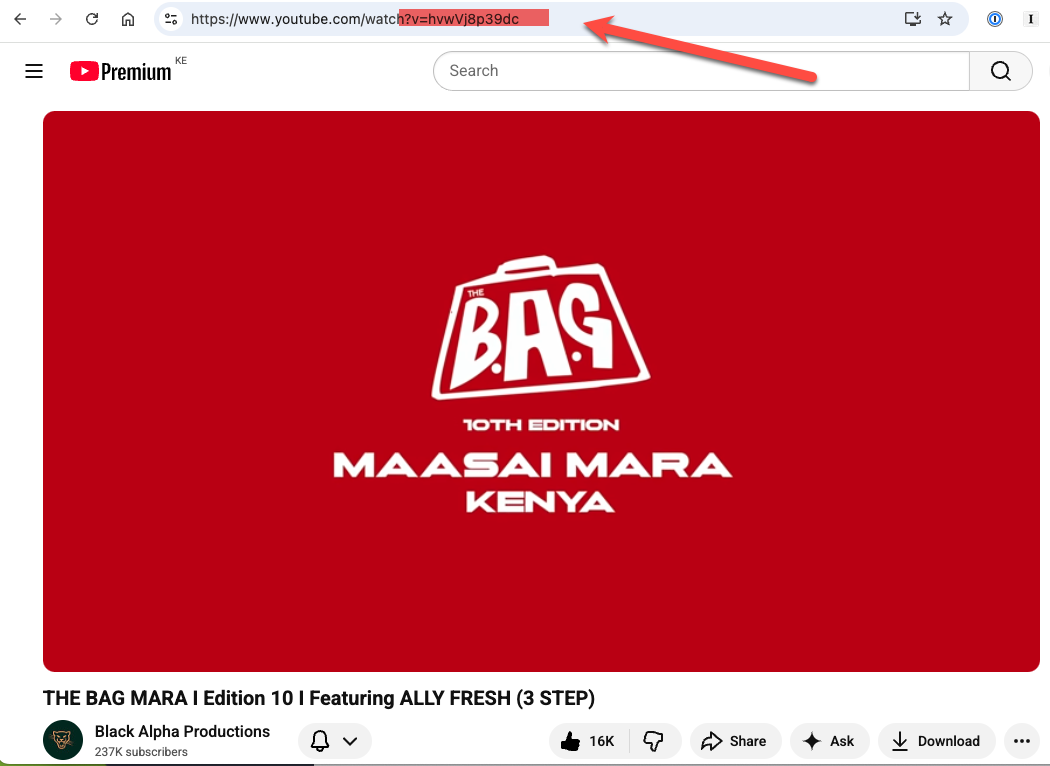
You can see here that the video has an identifier consisting of letters and numbers.
You can achieve the same result by using a package for generating identifiers, like sqlids.
dotnet add package sqids
We then update our code.
First, our updated Person class:
public sealed record Person
{
  public required int ID { get; init; }
  public string Identifier => new SqidsEncoder<int>().Encode(ID);
  public required string FirstName { get; init; }
  public required string Surname { get; init; }
}
Then our API:
using Sqids;

var builder = WebApplication.CreateBuilder(args);

var people = new List<Person.v2.Person>
{
    new()
    {
        ID = 1,
        FirstName = "James",
        Surname = "Bond"
    },
    new()
    {
        ID = 2,
        FirstName = "Jason",
        Surname = "Bourne"
    }
};

var app = builder.Build();

app.MapGet("/", () => Results.Ok(people));
app.MapGet("/v1/{ID:int}", (int id) =>
{
    var person = people.FirstOrDefault(x => x.ID == id);
    if (person is null)
        return Results.NotFound();
    return Results.Ok(person);
});


app.MapGet("/v2/{identifier}", (string identifier) =>
{
    //Decode the ID
    var decoder = new SqidsEncoder<int>();
    var id = decoder.Decode(identifier)[0];
    var person = people.FirstOrDefault(x => x.ID == id);
    if (person is null)
        return Results.NotFound();
    return Results.Ok(person);
});
await app.RunAsync();
Of interest is the following code:
var id = decoder.Decode(identifier)[0];
We are using [0] index access because the Decode method allows you to decode multiple identifiers at once, returning a List.
First, we view our List of Person:
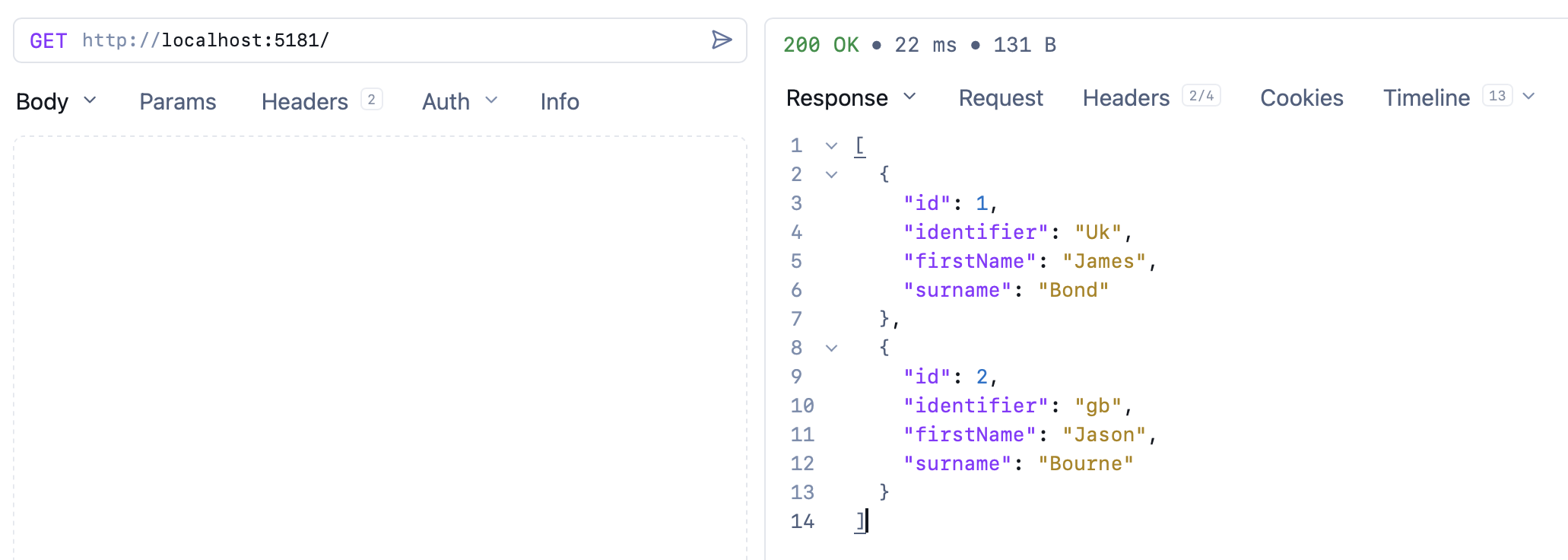
Here, you can see that our Identifier is generated.
We can use this to access our required Person via the new endpoint.
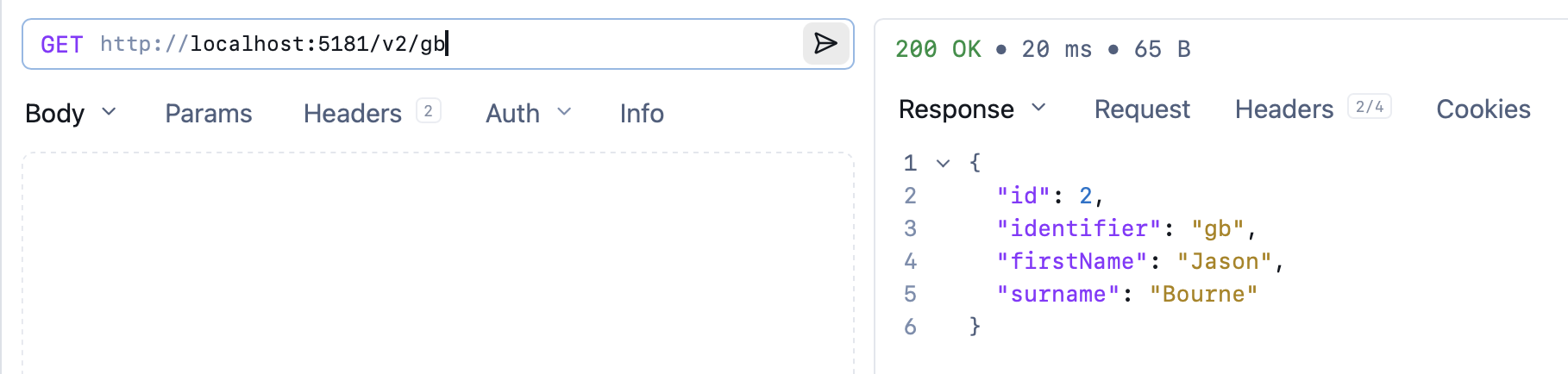
There are several opportunities for improvement with this code:
- We are repeatedly creating a
SqidsEncoder - Our identifier is too short. Perhaps we want it to have a minimum length
- We might want to customize the alphabet in use
We can update the code as follows:
using Sqids;

var builder = WebApplication.CreateBuilder(args);

var generator = new SqidsEncoder<int>(new()
{
    MinLength = 10,
    Alphabet = "ABCDEFGHKLMNPQRSTUVWYZabcdefghklmnpqrstuvwxyz23456789",
});

var people = new List<Person.v3.Person>
{
    new()
    {
        ID = 1,
        FirstName = "James",
        Surname = "Bond",
        Identifier = generator.Encode(1)
    },
    new()
    {
        ID = 2,
        FirstName = "Jason",
        Surname = "Bourne",
        Identifier = generator.Encode(2)
    }
};

var app = builder.Build();

app.MapGet("/", () => Results.Ok(people));
app.MapGet("/v1/{ID:int}", (int id) =>
{
    var person = people.FirstOrDefault(x => x.ID == id);
    if (person is null)
        return Results.NotFound();
    return Results.Ok(person);
});


app.MapGet("/v2/{identifier}", (string identifier) =>
{
    var id = generator.Decode(identifier)[0];
    var person = people.FirstOrDefault(x => x.ID == id);
    if (person is null)
        return Results.NotFound();
    return Results.Ok(person);
});
await app.RunAsync();
The magic is taking place here:
var generator = new SqidsEncoder<int>(new()
{
    MinLength = 10,
    Alphabet = "ABCDEFGHKLMNPQRSTUVWYZabcdefghklmnpqrstuvwxyz23456789",
});
We are creating an SqidsEncoder and configuring it:
- With a minimum length of 10
- With an alphabet that strips out
i,j, q (lower and upper case), as well as1and0
We then use this to encode and decode.
In a more elaborate API, you can create a SqidsEncoder and use dependency injection to access it from within endpoints.
If we now list our Person objects:
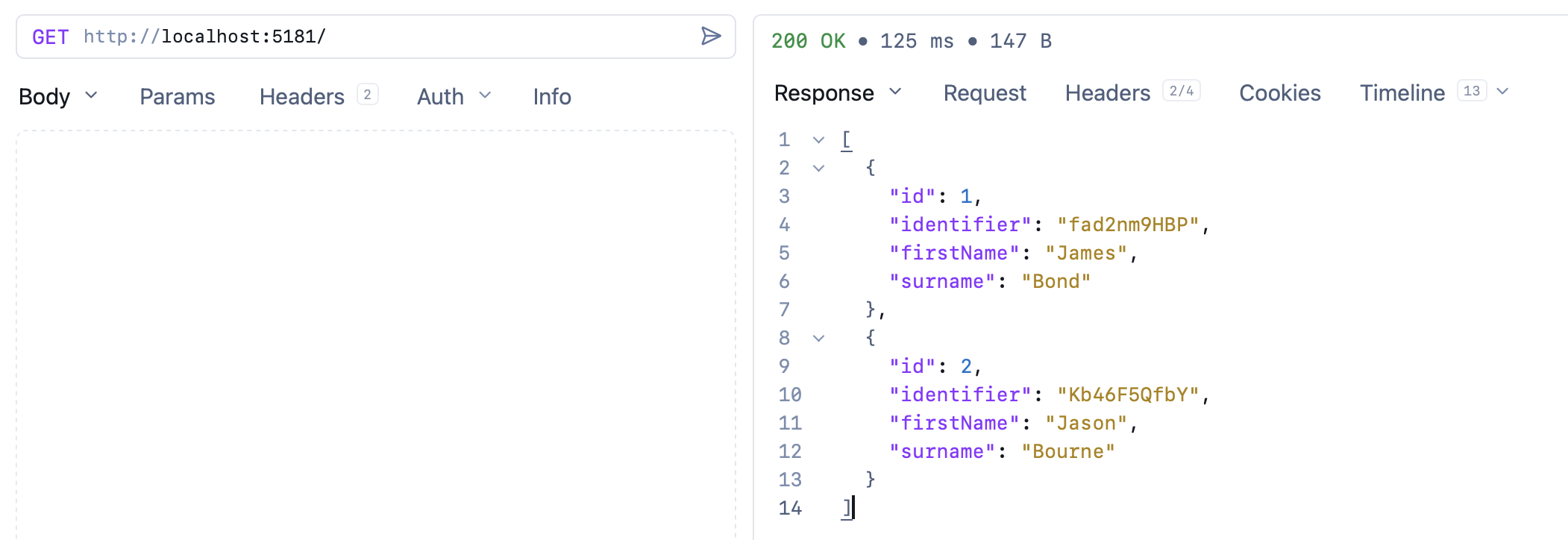
And our endpoint still works:
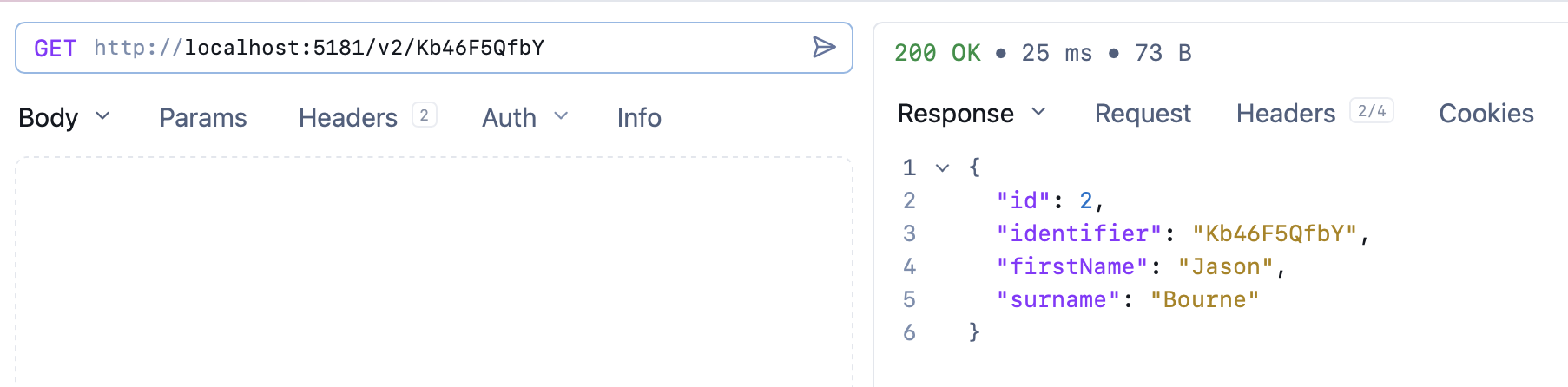
You can also write the endpoint like this, and skip decoding altogether:
app.MapGet("/v2/{identifier}", (string identifier) =>
{
    var id = generator.Decode(identifier)[0];
    var person = people.FirstOrDefault(x => x.Identifier == identifier);
    if (person is null)
        return Results.NotFound();
    return Results.Ok(person);
});
Your use case will determine the approach that you take.
Parting shot: Sqlids is the successor to Hashids.
TLDR
To generate unique, distributed identifiers, the library sqlids is an excellent choice.
The code is in my GitHub.
Happy hacking!