Generating Server-Side Sortable GUIDs for SQL Server
[C#, .NET, Database, SQL Server]
In some previous posts, we have seen the sort of challenges that may arise when generating Guid values for database keys, and in particular, an issue specific to SQL Server Guid sorting.
In a nutshell, client-generated GUIDs do not sort correctly, even when using Guid.CreateVersion7(), due to a complication when multiple Guid values are generated in the same millisecond.
Additionally, SQL Server sorts Guids using a different algorithm.
In this post, we will look at how to resolve this problem on the server side.
The solution here is to use the NEWSEQUENTIALID() function.
We have looked at this previously in the post Tip - Generating GUIDs for Use in Primary Keys in SQL Server.
We will use our sample type, the Thing:
public sealed record Thing(Guid ID, string Caption);
Our table will look like this:
create table things
(
    id      uniqueidentifier primary key default (newsequentialid()),
    caption nvarchar(100) not null
)
Here we are using NEWSEQUENTIALID() to supply the default value. The function is not usable as a normal function.
Our code to insert will look like this:
using Dapper;
using Microsoft.Data.SqlClient;

const string connectionString =
    "data source=localhost;uid=sa;password=YourStrongPassword123;database=things;trustservercertificate=true";
var thingCaptions = new List<string>();
for (var i = 0; i < 10; i++)
{
    thingCaptions.Add($"{i}");
}

foreach (var thing in thingCaptions)
{
    Console.WriteLine($"Caption: {thing}");

    using (var cn = new SqlConnection(connectionString))
    {
        cn.Execute("insert into things(caption) values (@Caption)", new { Caption = thing });
    }
}
Upon successful execution, it will output this:
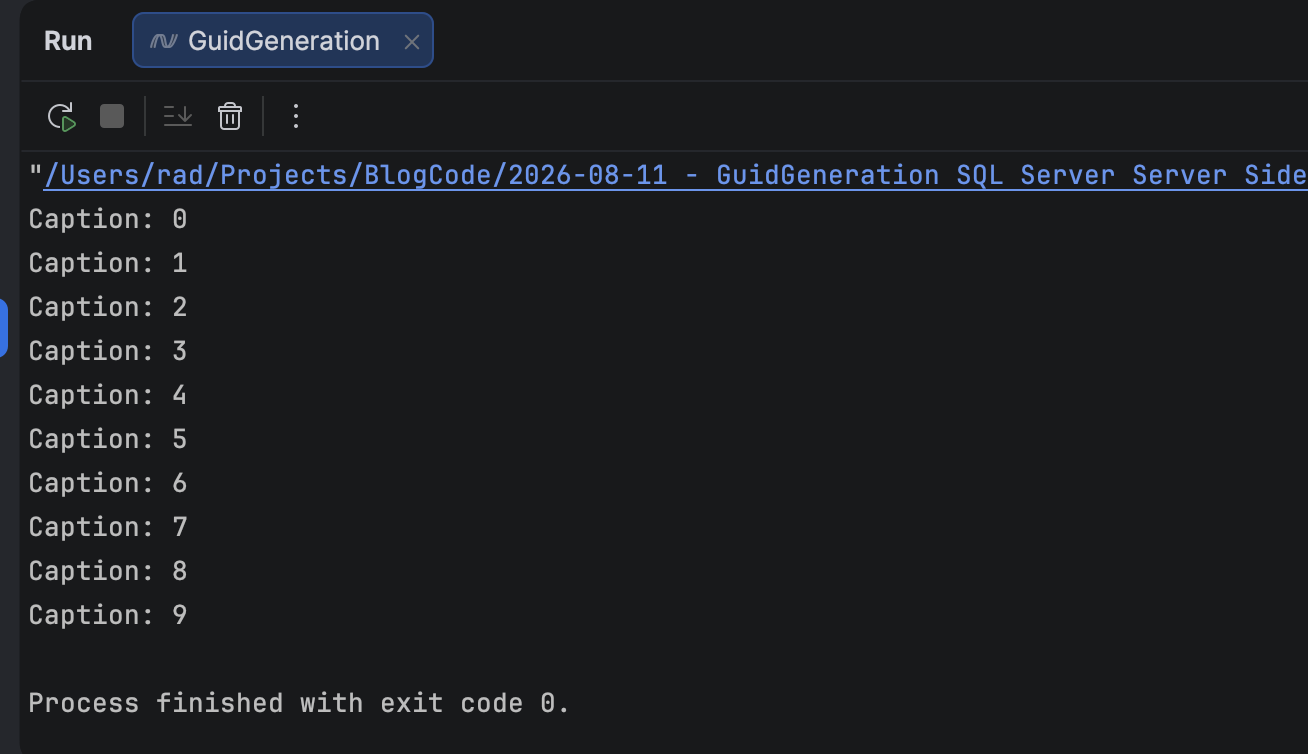
We can now go and inspect the database, by queriying all our Thing objects and sorting by ID.
select * from things order by id
We should see the following:
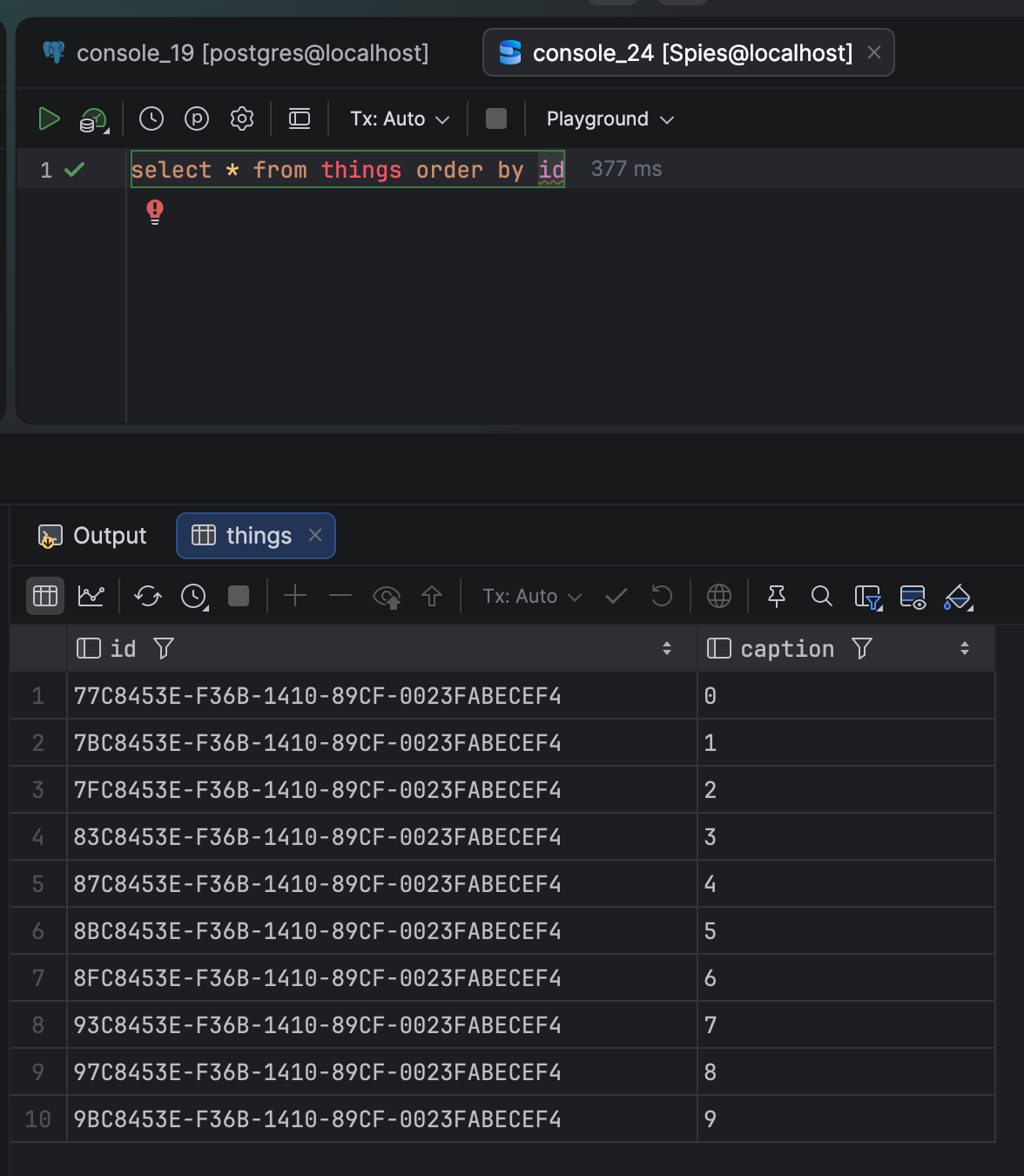
Here we can see they are correctly ordered as they were inserted.
TLDR
You can get correctly ordered Guids on the server side using the NEWSEQUENTIALID() function
The code is in my GitHub.
Happy hacking!